DPU har i 2026 udpeget fem nye adjungerede professorer.
Adjungerede professorer er internationalt anerkendte forskere, som samarbejder med forskningsmiljøer på DPU om forskning, forskningsprojekter og -ansøgninger.
Titlen adjungeret professor tildeles på Faculty of Arts ved Aarhus Universitet for en periode på højst 5 år.
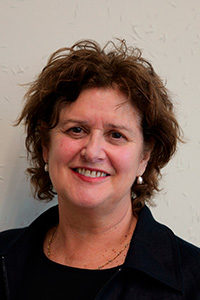
Julie McLeod is Professor of Curriculum, Equity and Social Change in the Faculty of Education, University of Melbourne.
Drawing on perspectives from history and sociology, McLeod’s scholarship explores the temporalities of educational reform movements and genealogies of educational ideas, with particular attention to the promises and paradoxes inherent in radical and progressive agendas. Her research encompasses youth and futures, feminism and curriculum, citizenship and social differentiation, as well as methodological innovation in biographical, memory-based, archival, and longitudinal approaches.
Current strands of work include: Youth identities and generational change; Progressive movements in education; and Schooling memory. She is co-Lead and Chair of the Steering Committee developing A Decadal Plan for Australian Education Research – a national strategic research initiative. She is an elected Fellow of the Academy of Social Science Australia, President of the Australian and New Zealand History of Education Society (2026-28), and Senior Faculty Advisor, Atlantic Fellows for Social Equity (2025-26).
McLeod served as Pro Vice-Chancellor (Research Capability), University of Melbourne (2017-2023), is an invited member of assessment panels for national and international research agencies, and was a Leader-in-Residence, Atlantic Institute, Rhodes Trust, University of Oxford (2022-24) and President of the Australian Association for Research in Education (2022-25).
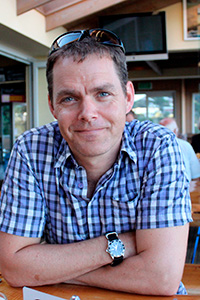
Alan Reid is a Professor of Education at the School of Learning and Teaching, Faculty of Education, Monash University. He contributes to a range of environmental and sustainability education research networks, locally to internationally, building on participation and mentoring rooted in the wide-ranging activities of the University of Bath’s Centre for Research in Education and the Environment in the mid-1990s, where he completed his PhD.
Key activities since the early 2000s include editing the field’s leading research journal, Environmental Education Research, and supporting the work of the Global Environmental Education Partnership to develop capacity and research-informed policy and practice in the sector.
Alan's programme of research focuses on educators’ thinking and practice in environmental and sustainability education within a variety of settings, alongside traditions, capacities and issues in related theory, research and infrastructures.
Recent projects have developed insights on educational policy and innovation in disaster risk reduction and resilience, how teaching and learning can tackle climate change illiteracy and foster human-nature connectedness in heavily urbanised lifeworlds, and the importance of dialogue between non-secular and secular visions for, and practices of, environmental and sustainability education.
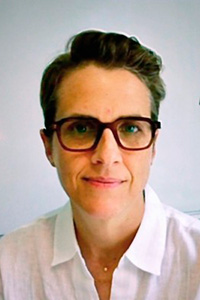
Sarah E. Truman is appointed Honorary Professor affiliated with the Policy Futures Research Program, Danish School of Education, Aarhus University, from September 1, 2026, to August 31, 2031. Truman is Associate Professor of English Literary Education and Cultural Studies at the University of Melbourne and Co-Editor of ‘Discourse’.
Truman’s interdisciplinary research examines how stories shape lived experience, pedagogical practice, and social imagination, with particular attention to how educators and young people engage critically with the present while imagining and building toward more just futures.
Working across literary education, speculative and Indigenous climate fictions, and creative research methodologies, Truman treats creative practice as a means of generating knowledge. Their research with secondary students and teachers internationally explores young people’s engagements with climate change, technology, social justice, and place. This work includes the monograph ‘Feminist Speculations and the Practice of Research-Creation’ (Routledge, 2021) and the edited collection ‘Research and Teaching with Speculative Fiction’ (Bloomsbury, 2026).
Truman co-directs the ‘Literary Education Lab’ and is a Chief Investigator on the ARC projects ‘Reading Climate: Indigenous Climate Fictions and Education and Slow Emergencies: Youth Futures and Policy Windows’. These collaborations bring educators, young people, researchers, cultural organizations, and policymakers into dialogue around climate, artificial intelligence, and social change. Truman is co-author of ‘Walking Methodologies in a More-than-Human World: WalkingLab’ (Routledge, 2018) and is one-half of the glitch folk duo ‘Oblique Curiosities’.
More information is available at sarahetruman.com.
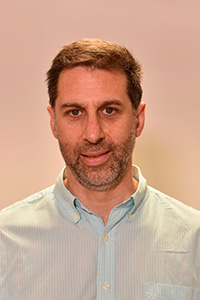
Michalinos Zembylas is appointed Honorary Professor affiliated with the Policy Futures Research Program, Danish School of Education, Aarhus University from September 1, 2026, until August 31, 2031.
Zembylas is Professor of Educational Theory and Curriculum Studies at the Open University of Cyprus, and Honorary Professor, Chair for Critical Studies in Higher Education Transformation, Nelson Mandela University, South Africa. His research examines the role of emotion and affect in education, with particular attention to their intersections with social justice, decolonization, and politics.
He is the author and editor of numerous books and scholarly articles. His upcoming book is entitled Seeking Anticolonial Synergies: The Promises and Paradoxes of Decolonizing Higher Education (Cambridge University Press).
Zembylas has received several distinctions, including the Distinguished Researcher Award in Social Sciences and Humanities from the Cyprus Research Promotion Foundation and the Commonwealth of Learning (COL) Chair in Open and Distance Learning (2023–2026). He has held fellowships at the University of British Columbia, the Unit for Institutional Change and Social Justice at the University of the Free State, and the Stellenbosch Institute for Advanced Study, and has served as Visiting Professor at the University of South Australia. Since 2021, he has been ranked among the top 2% of the world’s most-cited scholars in Stanford University’s annual citation-based rankings.
